


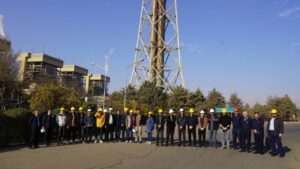
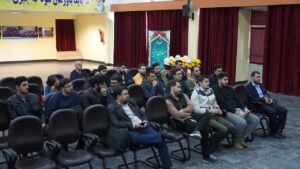
Report on the Scientific Visit to the Shahid Rajaei Qazvin Combined Cycle Power Plant
General Information
Visit Date: November 27, 2024
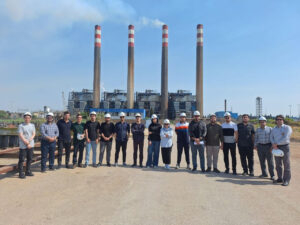
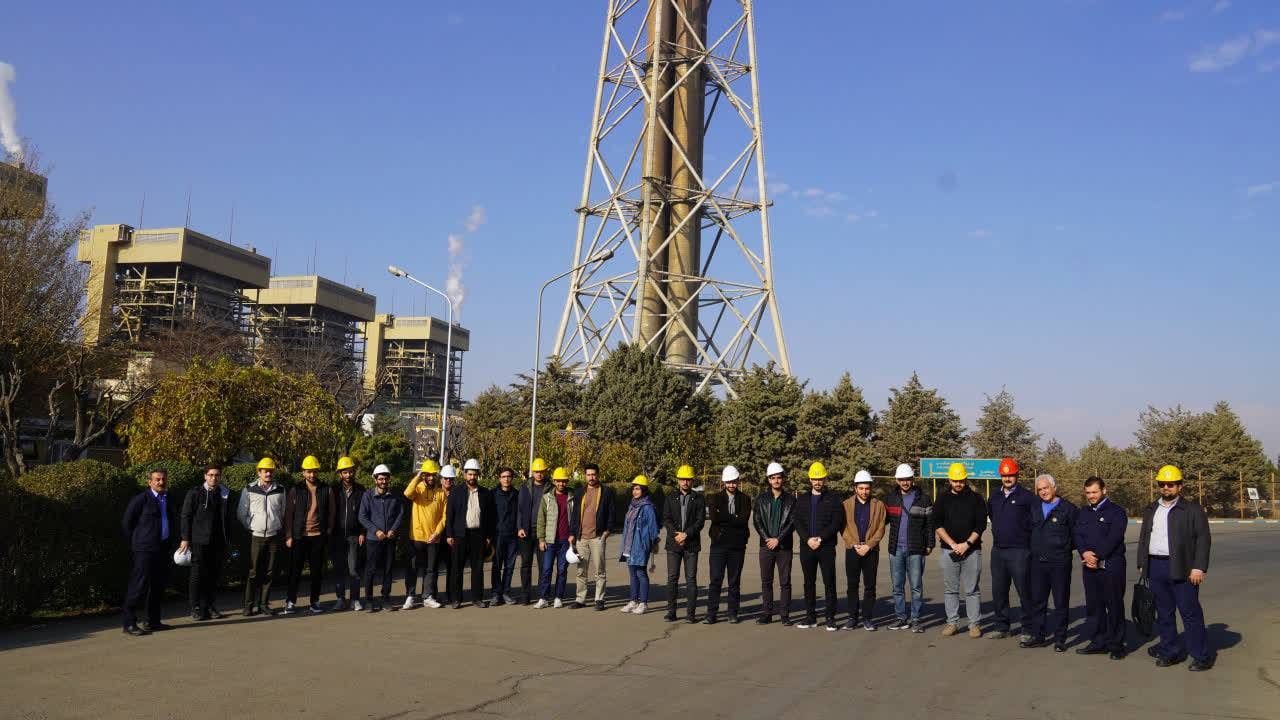
Participants: A group of Mechanical Engineering students from Sharif University of Technology
Departure and Return Times:
Departure from the university: 5:30 AM
Return to the origin: Approximately 3:00 PM
Introduction to the Power Plant Complex
The large-scale Shahid Rajaei Power Plant Complex is located at kilometer 25 of the Qazvin-Karaj Expressway and is one of the most important electricity production centers in the country. This complex spans an area of 343 hectares and consists of two main sections:
Steam Power Plant:
Comprises 4 steam units of 250 MW each
Total capacity: 1000 MW
Turbine manufacturer: Mitsubishi (Japan)
This section operates based on the traditional Rankine cycl
Combined Cycle Power Plant:
Comprises 6 gas units of 123.4 MW each (manufactured by GEC Alstom)
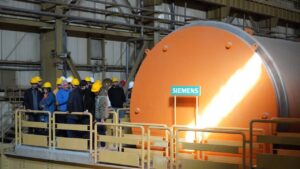
Comprises 3 steam units of 100.6 MW each (manufactured by Siemens)
Total combined cycle capacity: 1042 MW (sum of 6 gas units and 3 steam units)
Total capacity of the complex: 2042 MW
Visit Objectives:
Familiarization with the dual structure of a large-scale electricity production complex, including pure steam and combined cycle sections.
Practical comparison of the Rankine cycle (in the steam plant) with the Brayton-Rankine combined cycle, and understanding the efficiency advantages of the combined cycle.
Observation of key equipment from two major global manufacturers (Mitsubishi, Siemens, and GEC Alstom).
Integration of theoretical knowledge in thermodynamics and heat transfer with real-world operations on an industrial scale.
Visit Program (Considering the Vastness of the Complex):
Theoretical Session (Conference Hall):
General introduction to the complex, its history, and its vital role in the national power grid.
Explanation of the technical and economic differences between a steam power plant and a combined cycle plant.
Description of the heat recovery process in Heat Recovery Steam Generators (HRSG) and how efficiency increases from about 33% to over 50%.
Q&A session with experienced plant engineers.
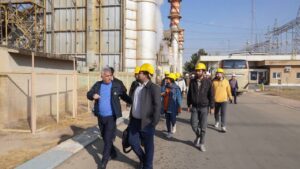
Field Visit (After a Break):
Visit to the combined cycle section: Observation of GEC Alstom gas turbines, Heat Recovery Steam Generators (HRSG), and Siemens steam turbines.
Visit to the steam section: Observation of large Mitsubishi steam turbines (250 MW), de-boilers, and feedwater systems.
Central Control Room (CCR): Familiarization with the integrated monitoring and control system for the two different sections of the power plant.
High Voltage Substation: Examination of equipment for converting and injecting over 2000 MW of electricity into the grid.
Scientific Achievements and Feedback:
Objective Comparison: Students tangibly witnessed the differences in size, complexity, and arrangement of equipment in two distinct types of thermal power plants.
Understanding the Concept of Efficiency: The primary reason for constructing new power plants as combined cycle (higher efficiency and lower fuel consumption) became clearly understandable.
Industrial Scale: Observing massive equipment, such as the 250 MW turbines, provided a comprehensive understanding of power engineering scales.
Connection with Coursework: Concepts from courses like Turbomachinery, Energy Conversion Systems, and Power Plants were observed practically and applicably.
Motivation for Future Paths: Familiarity with such grand national projects and the technologies employed increased the students’ motivation to pursue careers in the energy engineering field.
This visit opened a practical window into the real world of electricity generation and effectively bridged the gap between academic education and industry.